Introduction
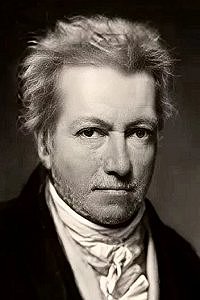
Born: November 7, 1765, Norwich, England.
Died: March 5, 1836, Norwich, England.
Born: November 7, 1765, Norwich, England.
Died: March 5, 1836, Norwich, England.
Only child of wealthy Norwich merchant William Taylor and Sarah Wright, William the younger was educated at the boarding school of Rochemont Barbauld (husband of Anna Barbauld) in Palgrave, Suffolk. After traveling through the Netherlands, France, Italy and Germany, he settled in Norwich in 1782.
In 1791, he retired from business and devoted himself to literature.
He was a frequent contributor to the Monthly, the Critical, and other Reviews, and was one of the first to introduce the study of German literature into England. His translation of Nathan der Weise, by Gotthold Ephraim Lessing, appeared in 1791, and of Iphigenia in Tauris, by Goethe (whom he had met in Weimar) in 1793. In 1813, he published English Synonyms Discriminated, and in 1828-30 his 3-volume Historical Survey of German Poetry.
John Warden Robberds published a two-volume Memoir of the Life and Writings of William Taylor in London in 1843.
Taylor was a member of the congregation of the Octagon Chapel, Norwich, and contributed five hymns to William Enfield’s 1795 Norwich Selection of Hymns for Social Worship.
If you know Taylor’s burial place,